
A First Course In Probability Answers
A First Course In Probability Answers - Hints and answers to selected exercises in fundamentals of probability: Solution manual for a first course in probability 10th edition / all chapters full complete 1.1 introduction 1.2 the basic principle of counting 1.3 permutations 1.4 combinations 1.5 multinomial coefficients 1.6 the number of integer solutions of equations here is a typical problem of inte. A first course in probability 10th edition solution manual problems chapter 1 1. A first course in probability chapter 1 : Answers in a pinch from experts and subject enthusiasts all semester long. 130 4.7.3 using tables in computing total probability. With expert solutions for thousands of practice problems, you can take the guesswork out of studying and move forward with confidence. A first course in probability: These are my solutions to the tenth edition of a first course in probability by sheldon ross. Hence, the desired probability is (n + 1/ n. With expert solutions for thousands of practice problems, you can take the guesswork out of studying and move forward with confidence. A first course, anirban dasgupta, springer, 2010 1 The answer is 5/12, which can be seen as follows: The ordering will be unchanged if for some k, 0 ≤ k ≤ n, the first k coin tosses land heads and; Our resource for a first course in probability includes answers to chapter exercises, as well as detailed information to walk you through the process step by step. The 8th edition of this so A first course in probability chapter 1 : A first course in probability (9th edition) textbook solutions from chegg, view all supported editions. 130 134 4.8.2 probability tree diagram for solving problems related to bayes' theorem 139 Our resource for a first course in probability includes answers to chapter exercises, as well as detailed information to walk you through the process step by step. Verified solutions & answers ) for free step by step explanations answered by teachers vaia original! With expert solutions for thousands of practice problems, you can take the guesswork out of studying and move forward with confidence. With expert solutions for thousands of practice problems, you can take the guesswork out of studying and move forward with confidence. A first. Hence, the desired probability is (n + 1/ n. 1 = p{first higher} + p{second higher} + p{same} = 2p{second higher} + p{same} = 2p{second higher} + 1/ Verified solutions & answers ) for free step by step explanations answered by teachers vaia original! Solution manual for a first course in probability 10th edition / all chapters full complete 1.1. Solution manual for a first course in probability 10th edition / all chapters full complete 1.1 introduction 1.2 the basic principle of counting 1.3 permutations 1.4 combinations 1.5 multinomial coefficients 1.6 the number of integer solutions of equations here is a typical problem of inte. Our solution manuals are written by chegg experts so you can be assured of the. Hence, the desired probability is (n + 1/ n. Answers in a pinch from experts and subject enthusiasts all semester long. (a) by the generalized basic principle of counting there are 26 26 10 10 10 10 10 = 67,600,000 (b) 26 25 10 9 8 7 6 = 19,656,000 2. A first course in probability 10th edition solution manual. Solution manual for a first course in probability 10th edition / all chapters full complete 1.1 introduction 1.2 the basic principle of counting 1.3 permutations 1.4 combinations 1.5 multinomial coefficients 1.6 the number of integer solutions of equations here is a typical problem of inte. A first course in probability textbook solutions from chegg, view all supported editions. A first. Answers in a pinch from experts and subject enthusiasts all semester long. Our resource for a first course in probability includes answers to chapter exercises, as well as detailed information to walk you through the process step by step. Our resource for a first course in probability includes answers to chapter exercises, as well as detailed information to walk you. With expert solutions for thousands of practice problems, you can take the guesswork out of studying and move forward with confidence. Solution manual for a first course in probability 10th edition / all chapters full complete 1.1 introduction 1.2 the basic principle of counting 1.3 permutations 1.4 combinations 1.5 multinomial coefficients 1.6 the number of integer solutions of equations here. Hence, the desired probability is (n + 1/ n. (a) by the generalized basic principle of counting there are 26 26 10 10 10 10 10 = 67,600,000 (b) 26 25 10 9 8 7 6 = 19,656,000 2. With expert solutions for thousands of practice problems, you can take the guesswork out of studying and move forward with confidence.. Verified solutions & answers ) for free step by step explanations answered by teachers vaia original! Our resource for a first course in probability includes answers to chapter exercises, as well as detailed information to walk you through the process step by step. With expert solutions for thousands of practice problems, you can take the guesswork out of studying and. If one tries to solve this problem with conditional probability it becomes very difficult. A first course in probability textbook solutions from chegg, view all supported editions. 130 134 4.8.2 probability tree diagram for solving problems related to bayes' theorem 139 Our resource for a first course in probability includes answers to chapter exercises, as well as detailed information to. 1 = p{first higher} + p{second higher} + p{same} = 2p{second higher} + p{same} = 2p{second higher} + 1/ (a) by the generalized basic principle of counting there are 26 26 10 10 10 10 10 = 67,600,000 (b) 26 25 10 9 8 7 6 = 19,656,000 2. The last n − k land tails. What is the probability that the last (100th) person to board the plane will sit in their proper seat (#100)? Verified solutions & answers ) for free step by step explanations answered by teachers vaia original! A first course in probability (9th edition) textbook solutions from chegg, view all supported editions. A first course, anirban dasgupta, springer, 2010 1 If one tries to solve this problem with conditional probability it becomes very difficult. A first course in probability 10th edition solution manual problems chapter 1 1. Textbook solutions for a first course in probability (10th edition) 10th edition sheldon ross and others in this series. Our resource for a first course in probability includes answers to chapter exercises, as well as detailed information to walk you through the process step by step. Ask our subject experts for help answering any of your homework questions! The 8th edition of this so Hence, the desired probability is (n + 1/ n. With expert solutions for thousands of practice problems, you can take the guesswork out of studying and move forward with confidence. Hints and answers to selected exercises in fundamentals of probability: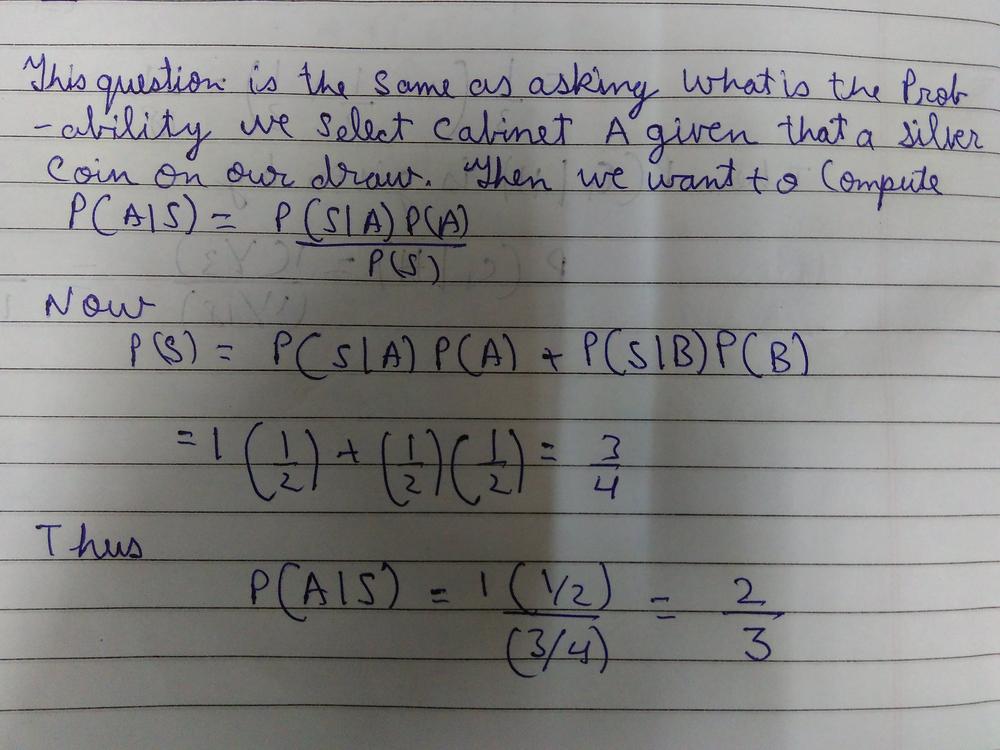
A First Course in Probability 9780136033134 Exercise 48 Quizlet
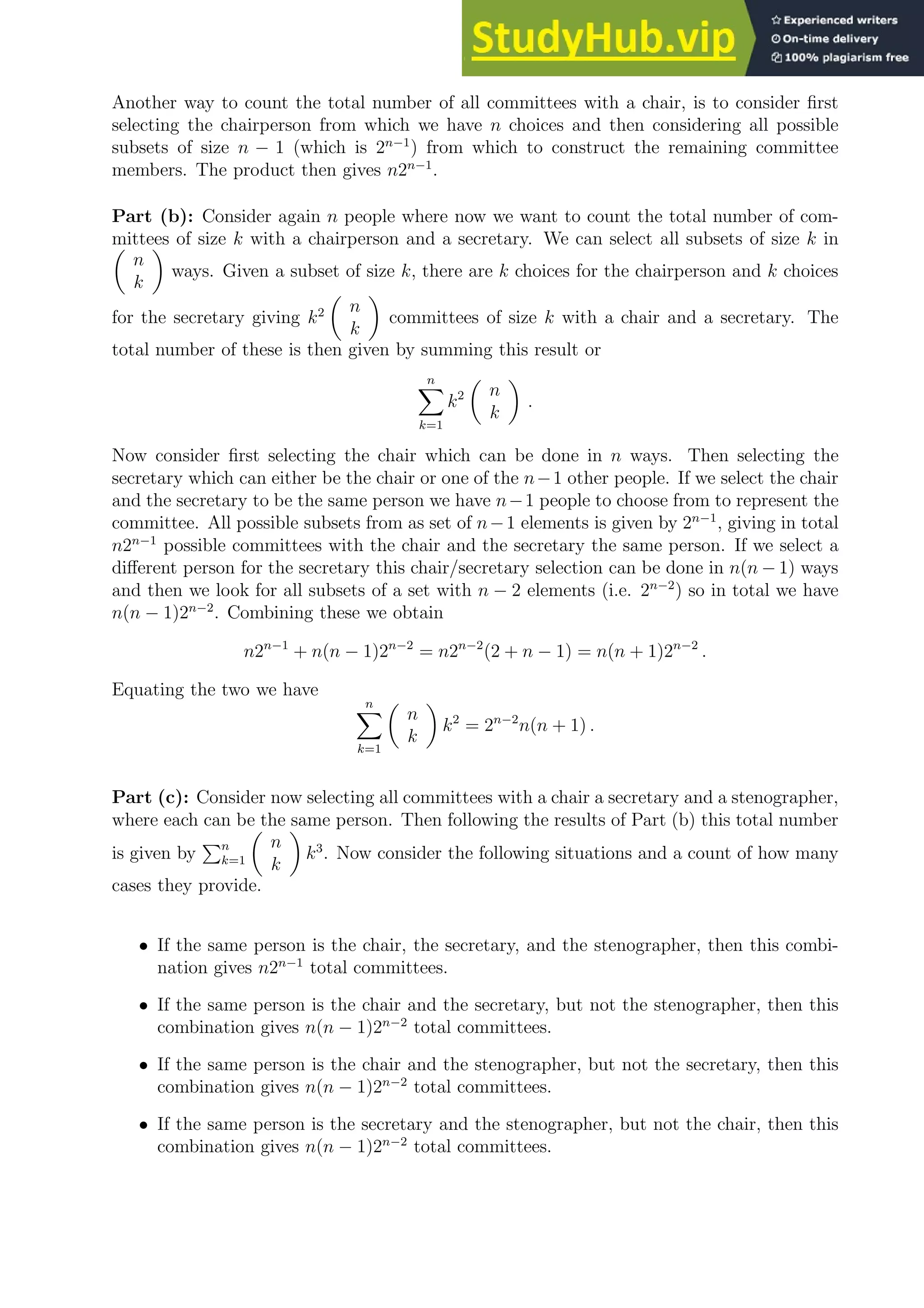
A Solution Manual For A First Course In Probability PDF
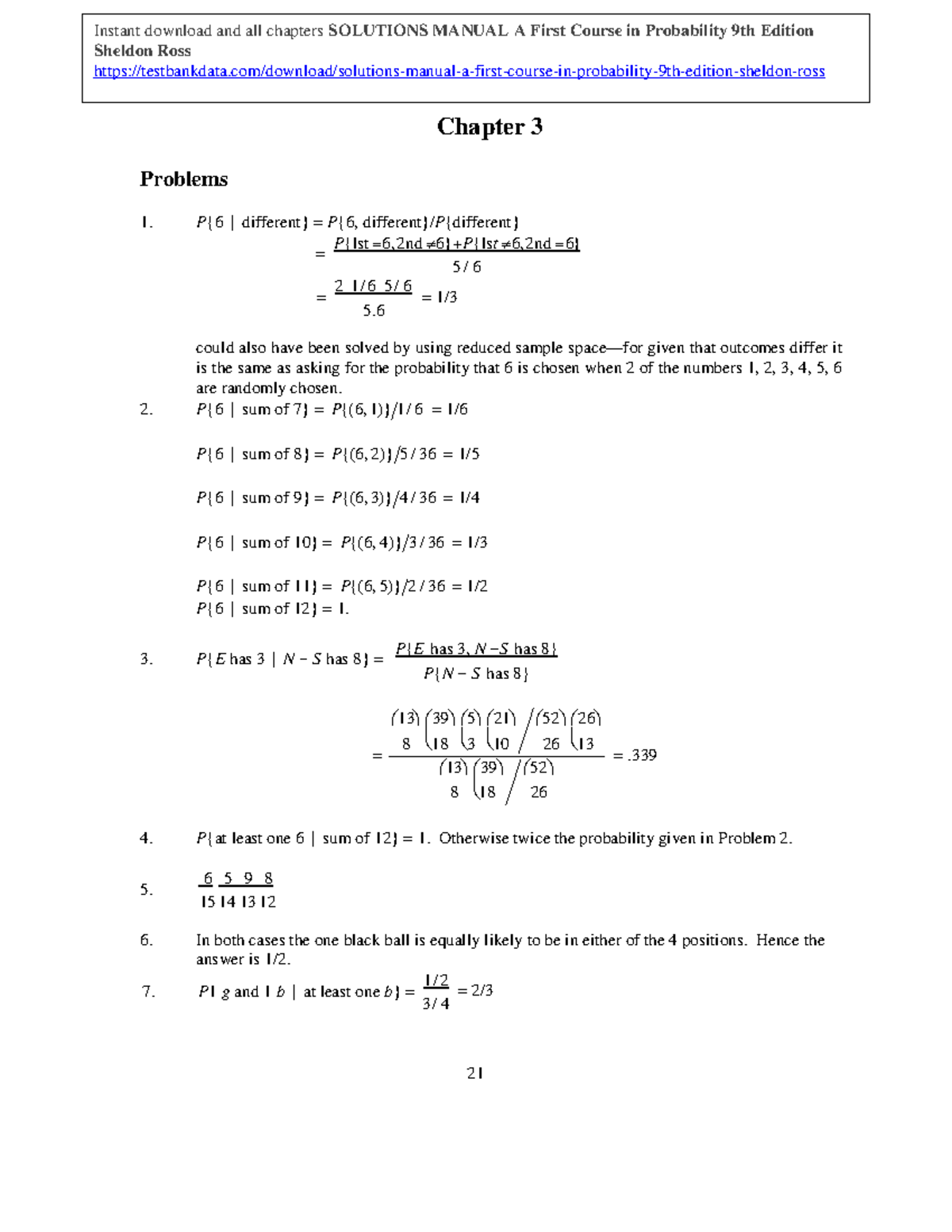
A first Course in probability chapter 3 solutions Chapter 3 Problems P{6 ⏐ different} = P{6
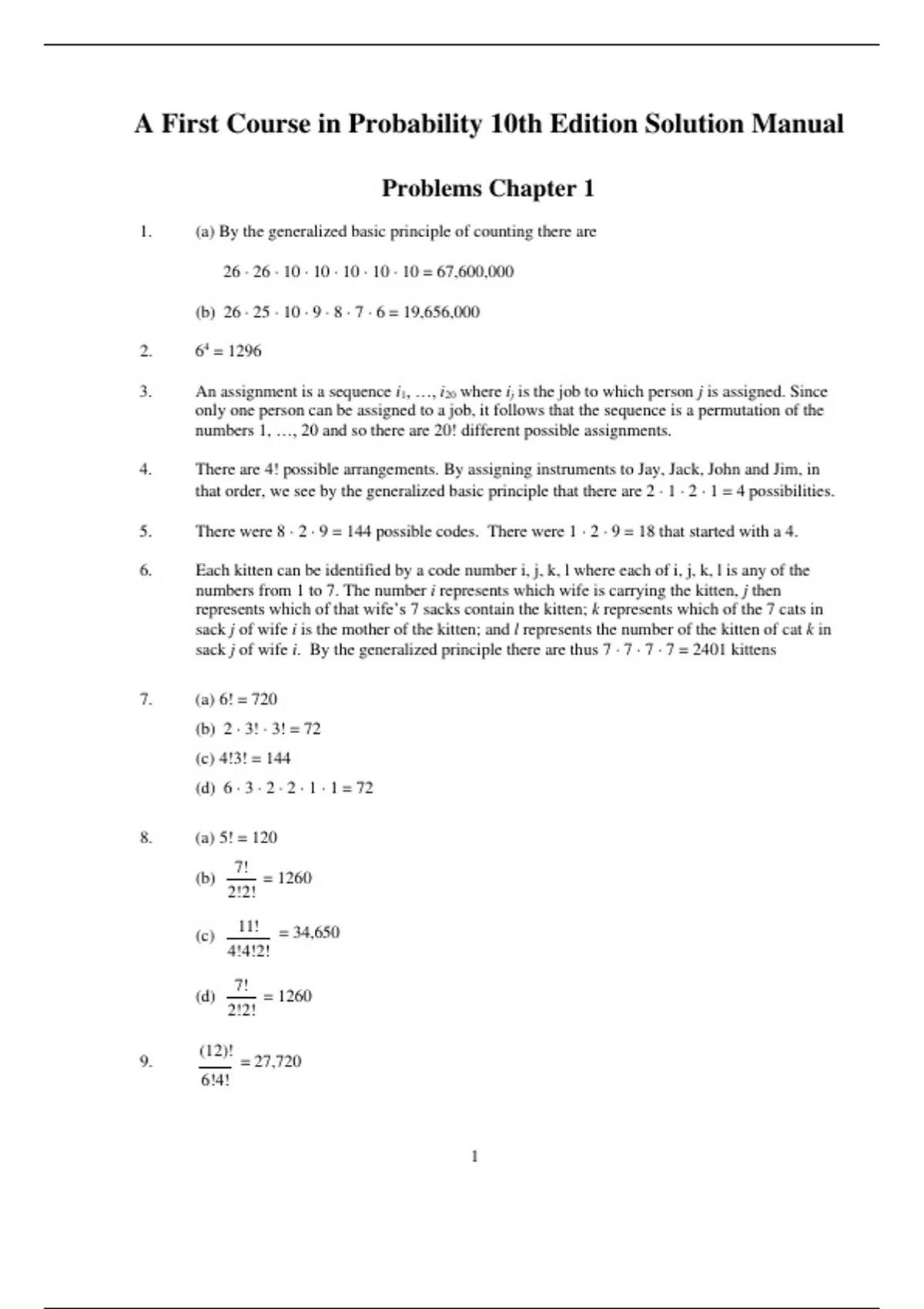
Complete Solution Manual A First Course in Probability 10th Edition Questions & Answers with
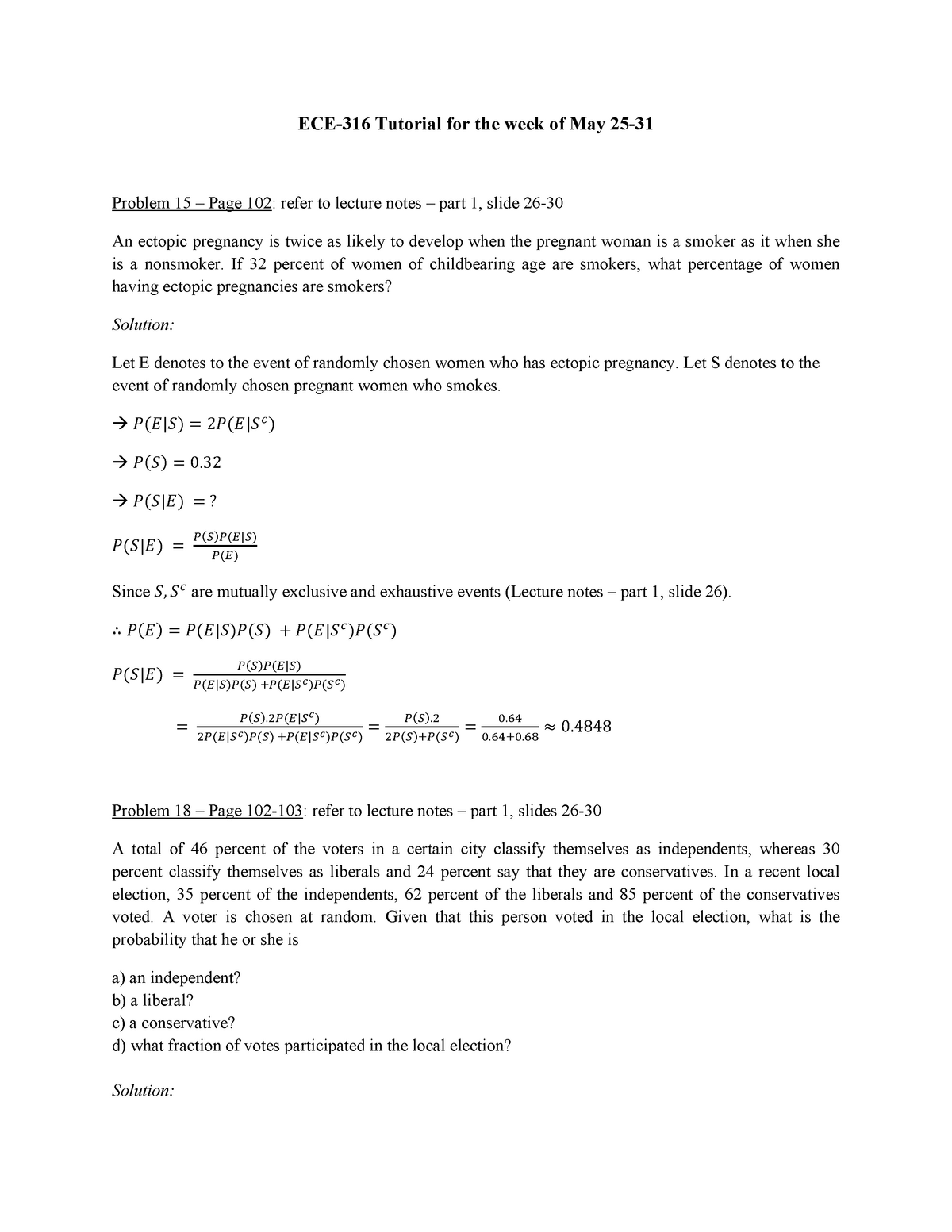
Solutions to Chapter3 'A first course in Probability' ECE316 Tutorial for the week of May 25
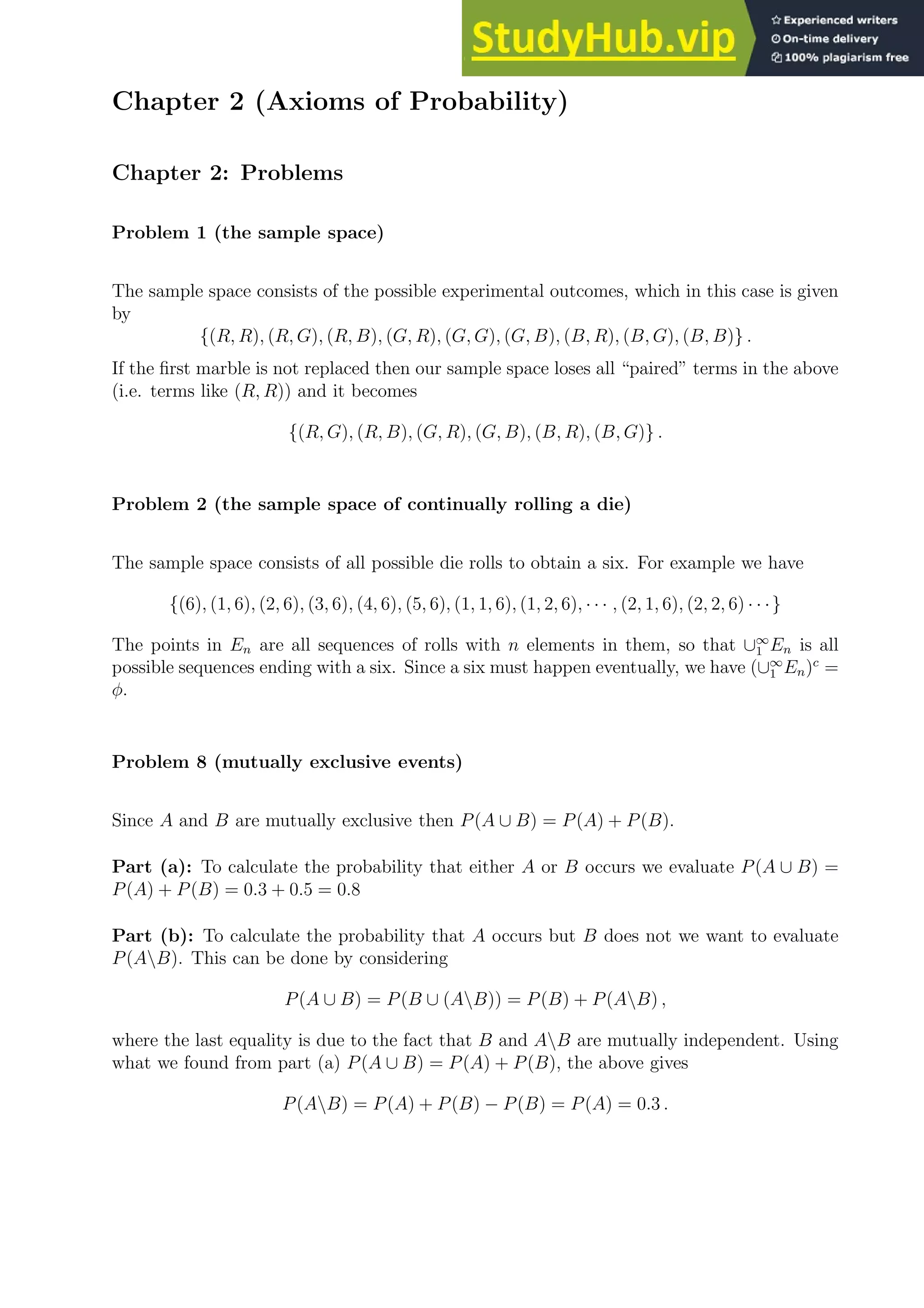
A Solution Manual For A First Course In Probability PDF
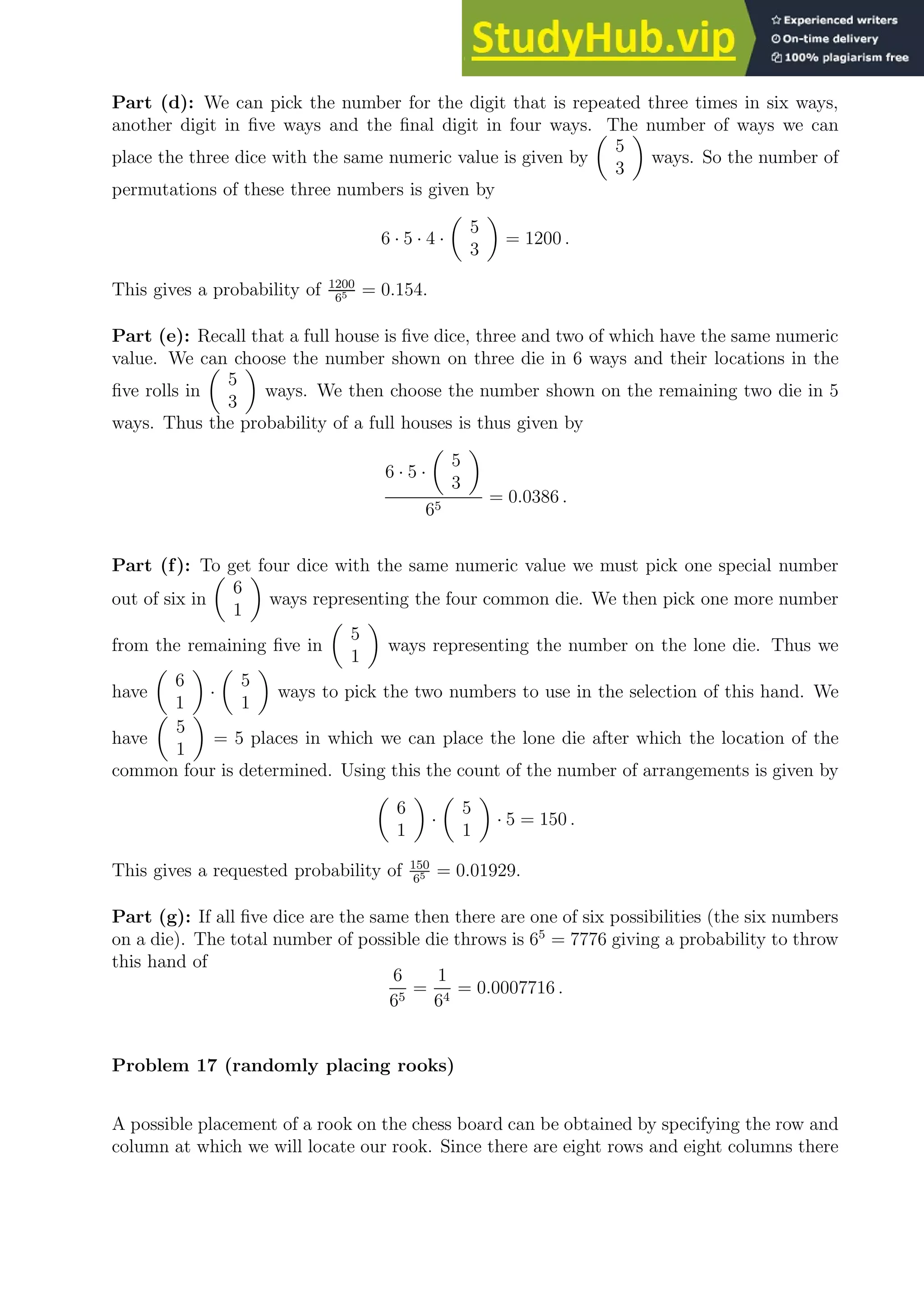
A Solution Manual For A First Course In Probability PDF
A First Course in Probability 9th Edition Solutions PDF Odds
A First Course In Probability Book Review YouTube
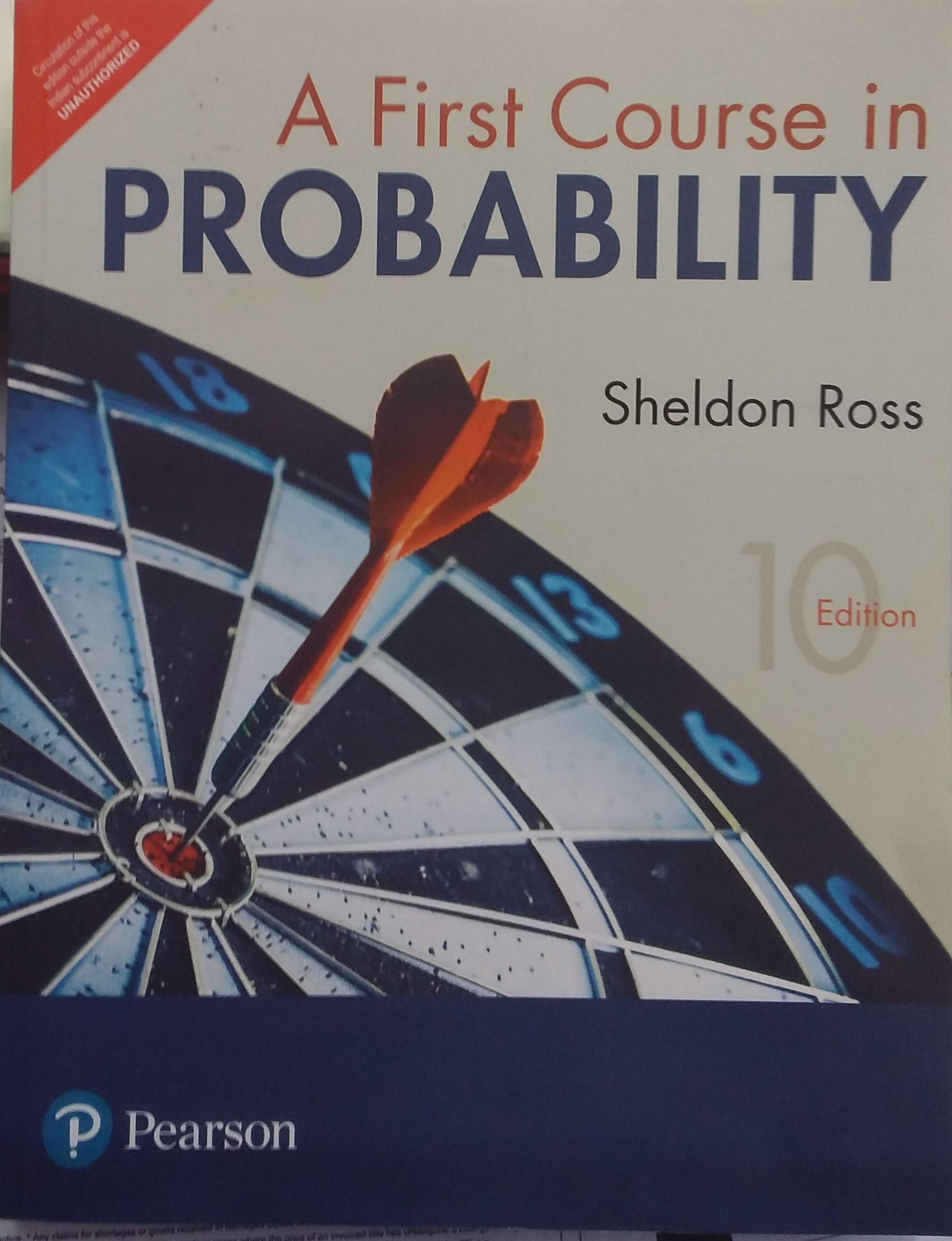
A First Course In Probability 10th Edition By Sheldon Ross (9789356064034) Universal Book Seller
Answers In A Pinch From Experts And Subject Enthusiasts All Semester Long.
The Answer Is 5/12, Which Can Be Seen As Follows:
A First Course In Probability:
130 134 4.8.2 Probability Tree Diagram For Solving Problems Related To Bayes' Theorem 139
Related Post:
