
Course Of Dealing In Contract Law
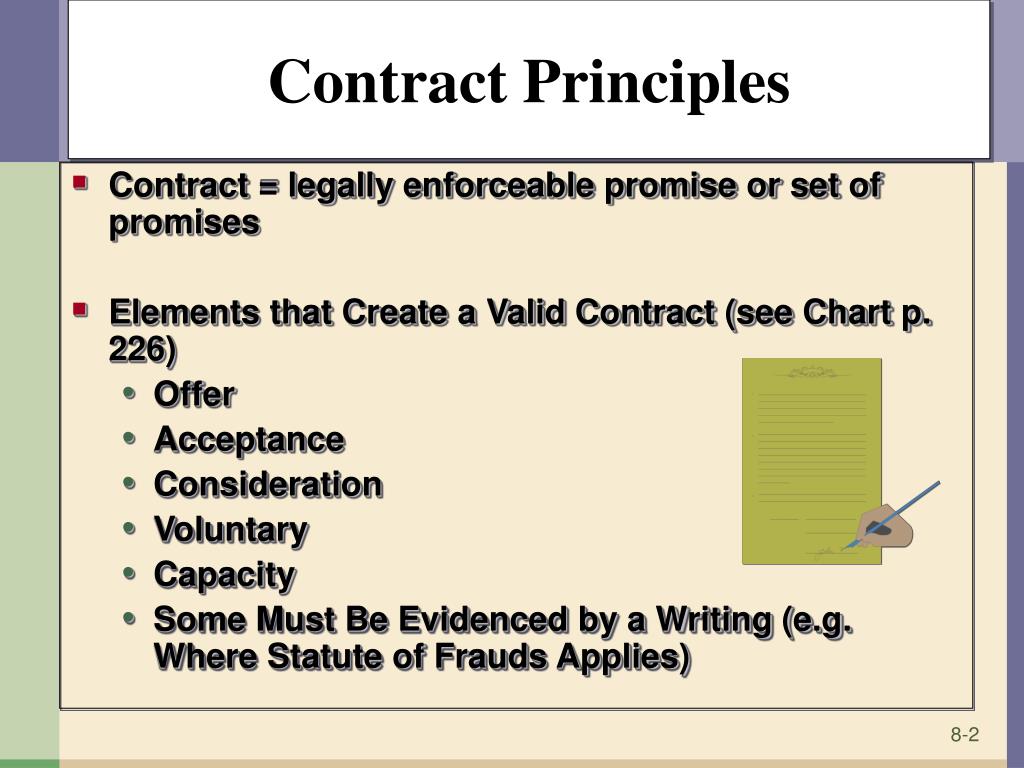
Course Of Dealing In Contract Law - Course of dealing, as defined in subsection (b), is restricted, literally, to a sequence of conduct between the parties previous to the agreement. Career trainingprofessional developmentregister todayview services This means how the parties have previously dealt with each other, prior to entering into the current contract. Establishing a course of dealing is relevant in contract law because it helps with the application of gap filling rules. The course of dealing between parties to an action is examined by a. The term applies, for example, to the laws governing contracts for the sale of goods, negotiable instruments, and. Stay updated with aisubscribe to learningjoin 69m+ learnersstart learning today And (2) the other party, with knowledge of the. Forty percent of the firm's revenue is from companies with government contracts, it said in its lawsuit. A clearly recognizable pattern of previous conduct between parties to a business transaction. Under contract law, a promise modifying a duty under a contract not fully performed on either side is binding even if not supported by consideration if the modification is fair and equitable in view. Course of dealing means a sequence of previous conduct between the parties to a particular transaction that establishes a common basis of understanding for interpreting their conduct. The term applies, for example, to the laws governing contracts for the sale of goods, negotiable instruments, and. When it comes to implied contracts, the course of dealing is an important aspect to consider. These concepts help interpret agreements and clarify. General definition a contract is a promise or set of promises, for the breach of which the law gives a remedy, or the performance of which the law in some way recognizes as a duty. Course of dealing refers to past interactions between parties, while course of performance focuses on how parties fulfill the terms of a specific contract. The ucc defines course of dealing in its general provisions (u.c.c. The course of dealing between parties to an action is examined by a. Forty percent of the firm's revenue is from companies with government contracts, it said in its lawsuit. Study with quizlet and memorize flashcards containing terms like where a court recognizes an agreement to be illegal, a lawsuit based on that agreement may be dismissed by the court. It is relevant in contract law. Establishing a course of dealing is relevant in contract law because it helps with the application of gap filling rules. This means how the. Course of dealing refers to a pattern of behavior in previous transactions that can be seen as evidence of a mutual understanding between the parties. (1) the agreement of the parties with respect to the transaction involves repeated occasions for performance by a party ; A sequence of conduct after or under the. Course of dealing means a sequence of. Course of dealing may become part of an agreement either by explicit provision or by tacit recognition, or it may guide the court in supplying an omitted term. Course of dealing refers to the previous conduct or behavior between the parties to a. The term applies, for example, to the laws governing contracts for the sale of goods, negotiable instruments,. This means how the parties have previously dealt with each other, prior to entering into the current contract. A “course of dealing” is a “sequence of previous conduct between the parties to an agreement which is fairly to be regarded as establishing a common basis of understanding for interpreting. Under contract law, a promise modifying a duty under a contract. A clearly recognizable pattern of previous conduct between parties to a business transaction. Forty percent of the firm's revenue is from companies with government contracts, it said in its lawsuit. This means how the parties have previously dealt with each other, prior to entering into the current contract. When it comes to implied contracts, the course of dealing is an. Under contract law, a promise modifying a duty under a contract not fully performed on either side is binding even if not supported by consideration if the modification is fair and equitable in view. The courses listed below provide a taste of the commercial, business, and labor law courses offered at the law school, although no formal groupings exist in. (a) a course of performance is a sequence of conduct between the parties to a particular transaction that exists if: The course of dealing between parties to an action is examined by a. A clearly recognizable pattern of previous conduct between parties to a business transaction. Stay updated with aisubscribe to learningjoin 69m+ learnersstart learning today The course of dealing. While clients were nervous, only one, which it had represented on a pro. When it comes to implied contracts, the course of dealing is an important aspect to consider. And (2) the other party, with knowledge of the. A sequence of conduct after or under the. (a) a course of performance is a sequence of conduct between the parties to. And (2) the other party, with knowledge of the. While clients were nervous, only one, which it had represented on a pro. Course of dealing means a sequence of previous conduct between the parties to a particular transaction that establishes a common basis of understanding for interpreting their conduct. A “course of dealing” is a “sequence of previous conduct between. General definition a contract is a promise or set of promises, for the breach of which the law gives a remedy, or the performance of which the law in some way recognizes as a duty. The course of dealing between parties to an action is examined by a. While clients were nervous, only one, which it had represented on a. Establishing a course of dealing is relevant in contract law because it helps with the application of gap filling rules. Course of dealing refers to the previous conduct or behavior between the parties to a. Course of dealing refers to a sequence of previous conduct between parties involved in a transaction that establishes a common basis for interpreting their interactions. Course of dealing refers to past interactions between parties, while course of performance focuses on how parties fulfill the terms of a specific contract. These concepts help interpret agreements and clarify. (1) the agreement of the parties with respect to the transaction involves repeated occasions for performance by a party ; The course of dealing between parties to an action is examined by a. A clearly recognizable pattern of previous conduct between parties to a business transaction. The course of dealing between parties to an action is examined by a. It is relevant in contract law. While clients were nervous, only one, which it had represented on a pro. And (2) the other party, with knowledge of the. A third manifestation of intent is course of dealing. This means how the parties have previously dealt with each other, prior to entering into the current contract. Forty percent of the firm's revenue is from companies with government contracts, it said in its lawsuit. Course of dealing refers to a pattern of behavior in previous transactions that can be seen as evidence of a mutual understanding between the parties.
Notes for Class Contract Law 2 Exemption Clauses Lecture 5 February 2

"Course of dealing" Can Define Government Contract
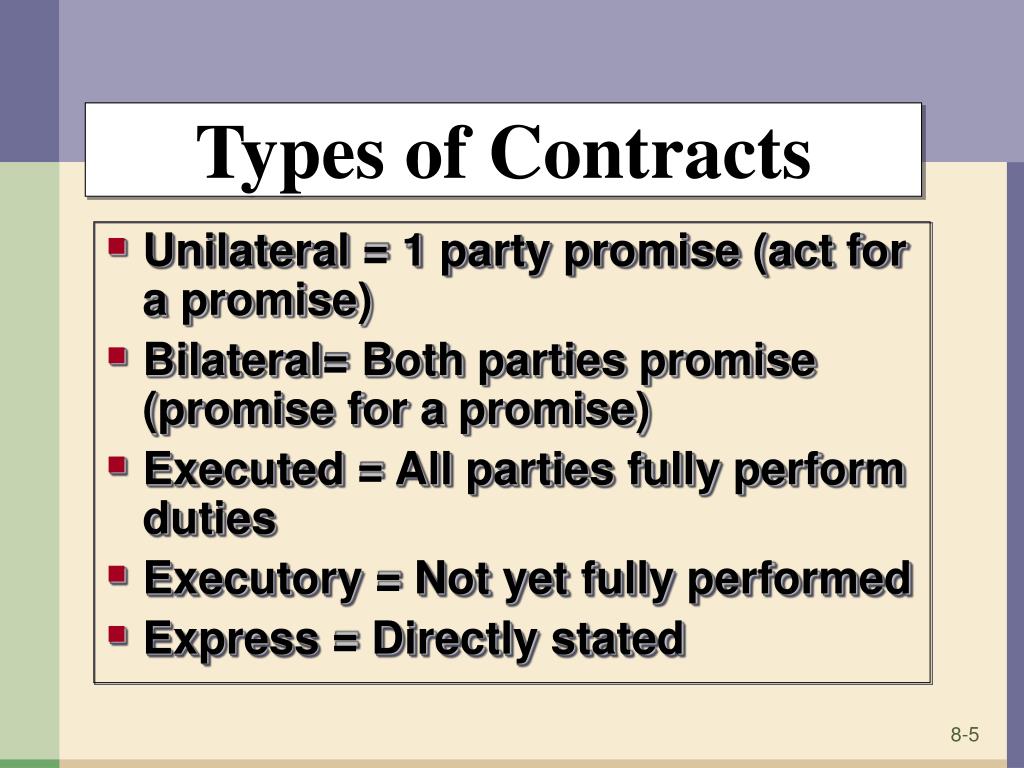
PPT Principles Of Contract Law PowerPoint Presentation, free download

Law of Contract Terms of Contract 2 Incorporation of Terms ppt download
.jpg)
Chapter 11 Nature and Terminology ppt download
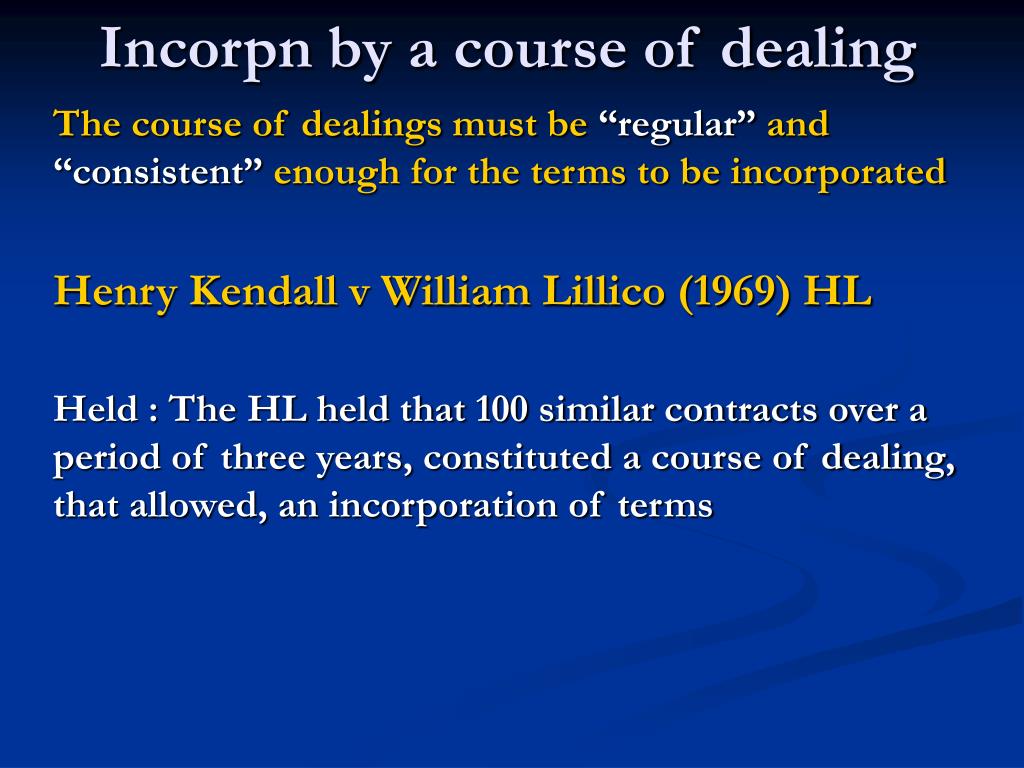
PPT Law of Contract Terms of Contract 2 Incorporation of Terms
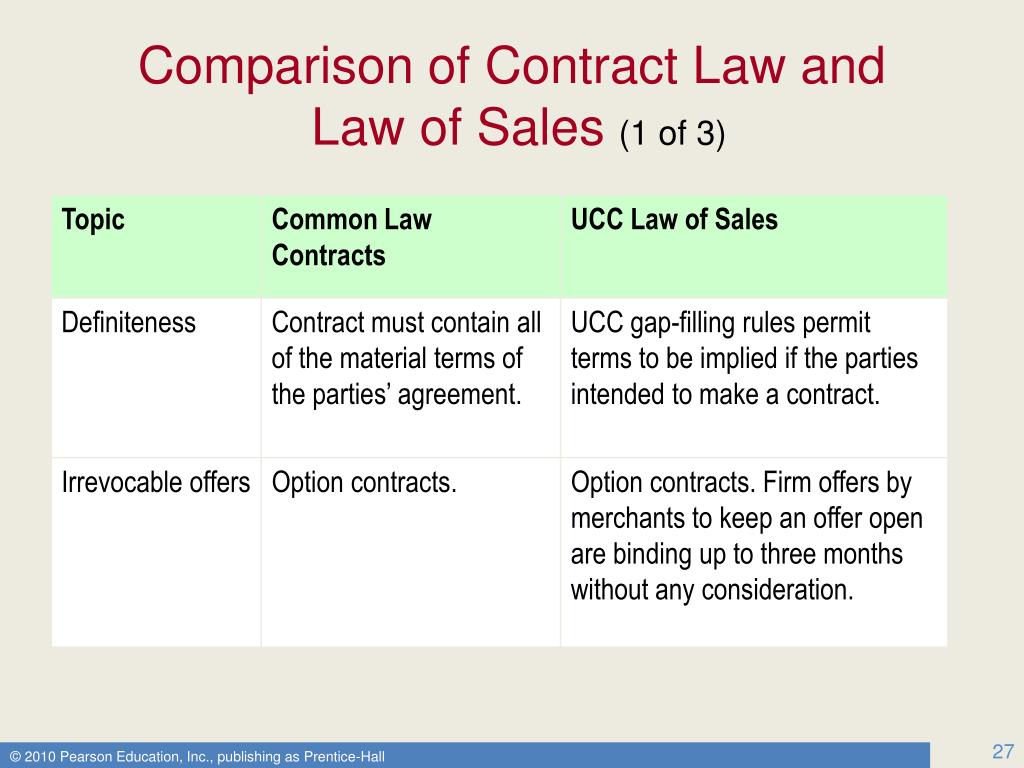
PPT CHAPTER 18 PowerPoint Presentation, free download ID299390
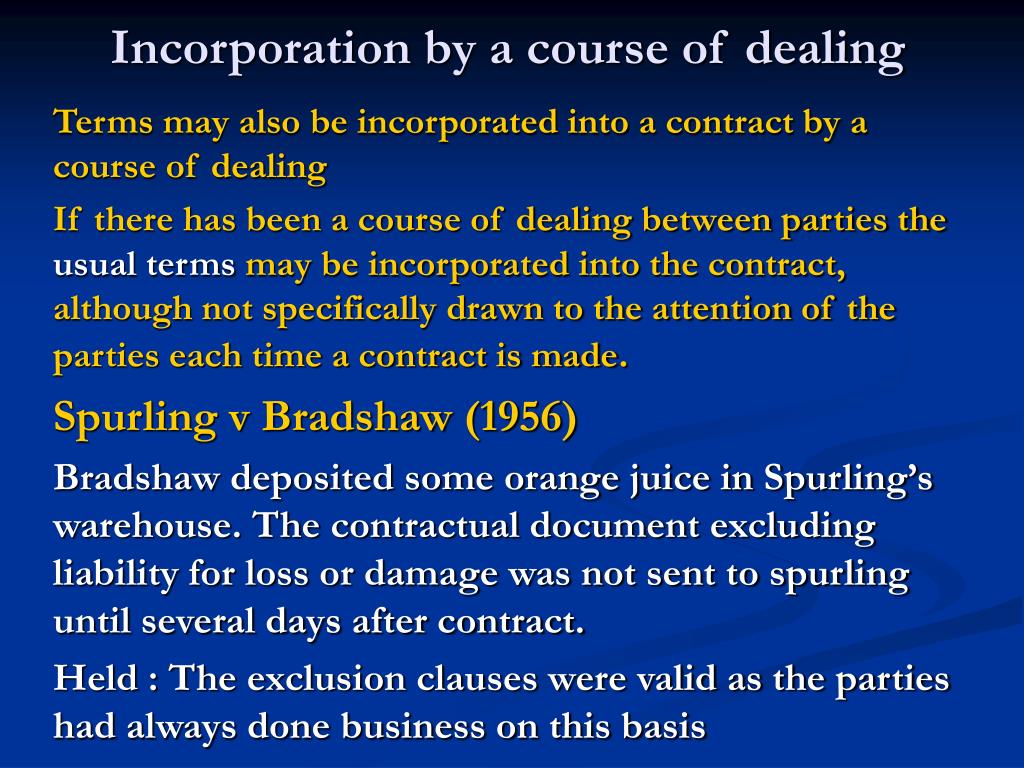
PPT Law of Contract Terms of Contract 2 Incorporation of Terms
PPT Principles Of Contract Law PowerPoint Presentation, free download

Law Results try missing fileIf parties to a contract, by their course
A Sequence Of Conduct After Or Under The.
The Term Applies, For Example, To The Laws Governing Contracts For The Sale Of Goods, Negotiable Instruments, And.
General Definition A Contract Is A Promise Or Set Of Promises, For The Breach Of Which The Law Gives A Remedy, Or The Performance Of Which The Law In Some Way Recognizes As A Duty.
Like Usage Of Trade, It May.
Related Post: