
Holder And Holder In Due Course
Holder And Holder In Due Course - Learn about the rights, limitations and history of this concept in commercial. Holder in due course and privileges: Holder in due course can be termed as a person who acquires a negotiable instrument for consideration in good faith before it becomes due for payment and without having knowledge. S/he is someone who is entitled to receive or recover the amount due on the instrument. Holder in due course refers to the. Explore key requirements and legal protections under the ucc. Understanding the difference between holder and holder in due course is essential for legal professionals, businesses, and individuals dealing with negotiable instruments to. Holder is a person who is entitled for the possession of a negotiable instrument in his own name. Hence he shall receive or recover the amount due thereon. A holder possesses a negotiable instrument with the right to enforce it, while a holder in due course acquires it in good faith, without defects, and holds superior rights. Holder in due course must obtain the instrument in good faith. We mean the payee of the negotiable instrument, who is in possession of it. Who is a holder in due course? Holder in due course can be termed as a person who acquires a negotiable instrument for consideration in good faith before it becomes due for payment and without having knowledge. S/he is someone who is entitled to receive or recover the amount due on the instrument. Holder in due course refers to the. Learn the meaning and comparison of holder and holder in due course, two terms related to negotiable instruments. Explore key requirements and legal protections under the ucc. A holder in due course (hdc) is someone who takes a negotiable instrument without reason to doubt its payment. A holder in due course is any person who receives or holds a negotiable instrument such as a check or promissory note in good faith and in exchange for value; Under ucc article 3, a holder in due course is someone who acquires a negotiable instrument in good faith, for value, and without notice of any defects or claims. A holder possesses a negotiable instrument with the right to enforce it, while a holder in due course acquires it in good faith, without defects, and holds superior rights. A holder. Explore key requirements and legal protections under the ucc. Holder in due course refers to the. Section 9 of the act defines ‘holder in due course’ as any person who (i) for valuable consideration, (ii) becomes the possessor of a. A holder in due course obtains the negotiable instrument in good faith for consideration prior to it becomes due for. Learn about the rights, limitations and history of this concept in commercial. Under ucc article 3, a holder in due course is someone who acquires a negotiable instrument in good faith, for value, and without notice of any defects or claims. This is the basic difference between the holder and holder in due course. Learn the meaning and comparison of. Section 9 of the act defines ‘holder in due course’ as any person who (i) for valuable consideration, (ii) becomes the possessor of a. Holder in due course can be termed as a person who acquires a negotiable instrument for consideration in good faith before it becomes due for payment and without having knowledge. Holder in due course and privileges:. Holder is a person who is entitled for the possession of a negotiable instrument in his own name. Who is a holder in due course? Learn the meaning and comparison of holder and holder in due course, two terms related to negotiable instruments. Holder in due course must obtain the instrument in good faith. This is the basic difference between. Hence he shall receive or recover the amount due thereon. A holder in due course (hdc) is someone who takes a negotiable instrument without reason to doubt its payment. This is the basic difference between the holder and holder in due course. Explore key requirements and legal protections under the ucc. Holder is a person who is entitled for the. We mean the payee of the negotiable instrument, who is in possession of it. Explore key requirements and legal protections under the ucc. Holder in due course refers to the. Learn about the rights, limitations and history of this concept in commercial. Holder in due course and privileges: Holder in due course refers to the. Holder in due course and privileges: A holder possesses a negotiable instrument with the right to enforce it, while a holder in due course acquires it in good faith, without defects, and holds superior rights. A holder is a payee who can sue the parties liable, while a holder in due course is. Holder in due course must obtain the instrument in good faith. A holder in due course is any person who receives or holds a negotiable instrument such as a check or promissory note in good faith and in exchange for value; Who is a holder in due course? A holder in due course obtains the negotiable instrument in good faith. A holder in due course obtains the negotiable instrument in good faith for consideration prior to it becomes due for payment. Hence he shall receive or recover the amount due thereon. Who is a holder in due course? Holder is a person who is entitled for the possession of a negotiable instrument in his own name. This is the basic. A holder in due course (hdc) is someone who takes a negotiable instrument without reason to doubt its payment. Learn about the holder in due course concept, its rules, examples, and real estate applications. Holder refers to a person; Hence he shall receive or recover the amount due thereon. Under ucc article 3, a holder in due course is someone who acquires a negotiable instrument in good faith, for value, and without notice of any defects or claims. Holder in due course refers to the. In contrast, a holder in due course, or hdc, refers to someone who acquires the instrument in good faith, for value, and before its maturity date, without knowledge of any defects in the. Learn the meaning and comparison of holder and holder in due course, two terms related to negotiable instruments. A holder in due course is any person who receives or holds a negotiable instrument such as a check or promissory note in good faith and in exchange for value; Learn about the rights, limitations and history of this concept in commercial. Holder in due course must obtain the instrument in good faith. We mean the payee of the negotiable instrument, who is in possession of it. Holder in due course can be termed as a person who acquires a negotiable instrument for consideration in good faith before it becomes due for payment and without having knowledge. A holder in due course obtains the negotiable instrument in good faith for consideration prior to it becomes due for payment. Holder in due course and privileges: Who is a holder in due course?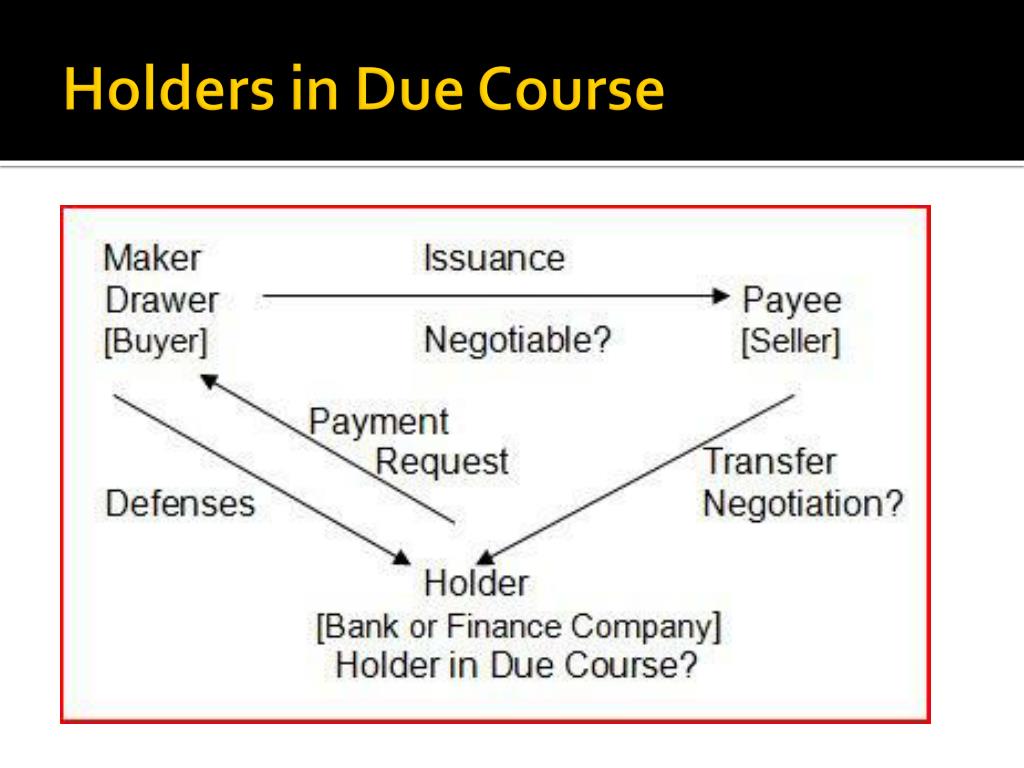
PPT Holders in Due Course PowerPoint Presentation, free download ID
Holder and Holder in Due Course PDF Negotiable Instrument Common Law
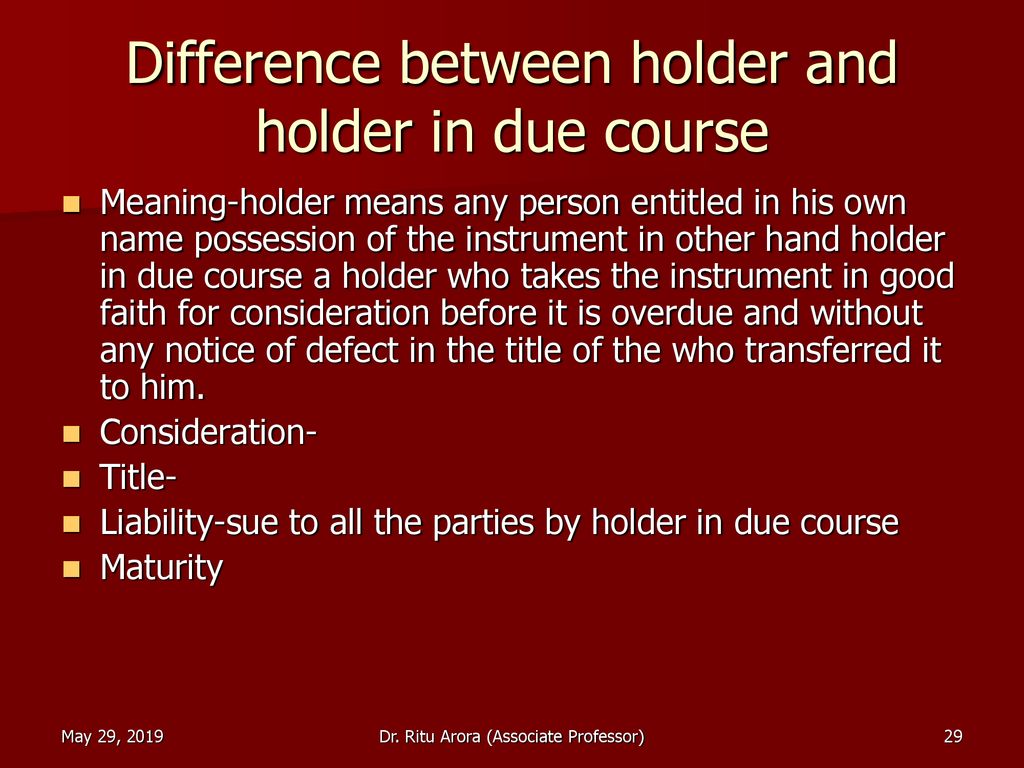
The Negotiable Instruments Act, ppt download

PPT Negotiable Instruments PowerPoint Presentation, free download

PPT Negotiable Instruments PowerPoint Presentation, free download
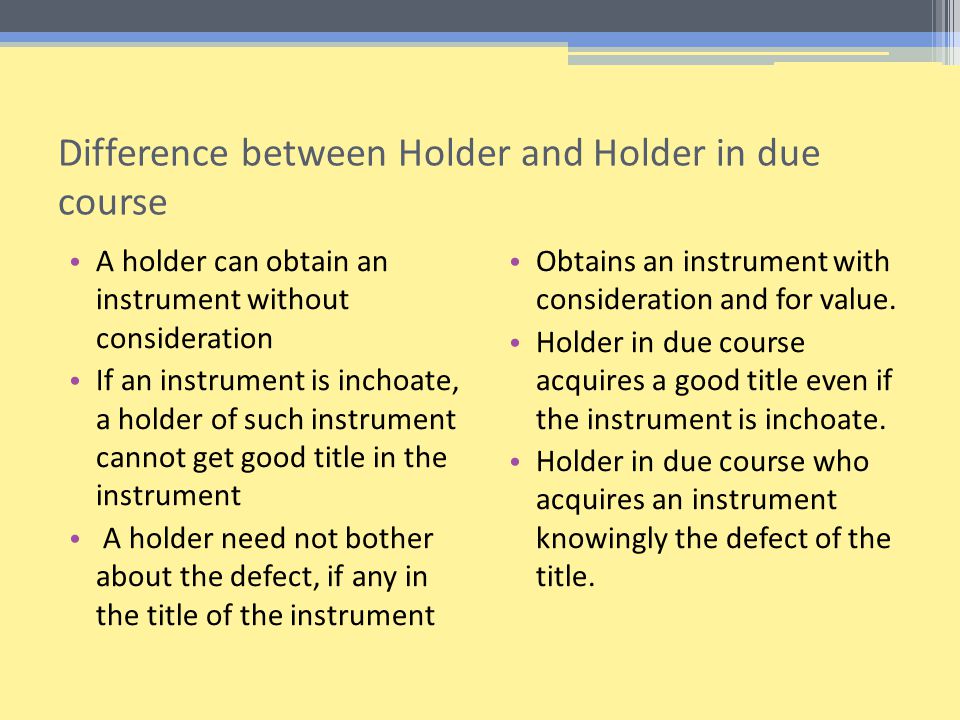
NEGOTIABLE INSTRUMENTS ACT ppt video online download
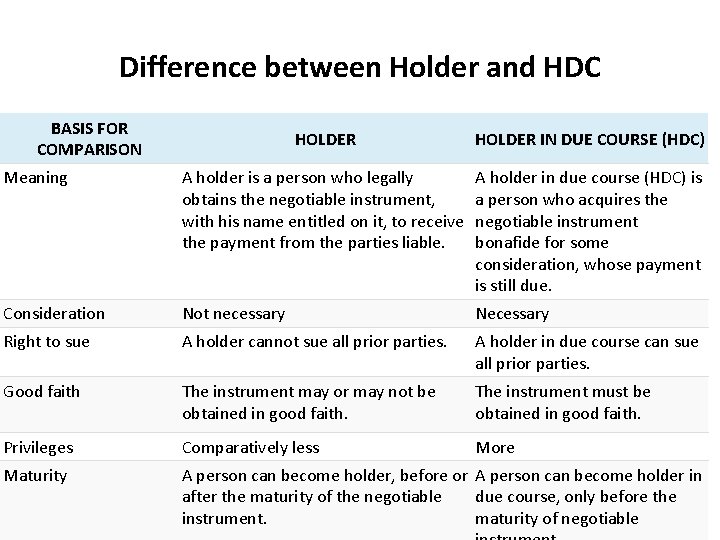
Holder and Holder in Due course Dr Manish

Holder in Due Course
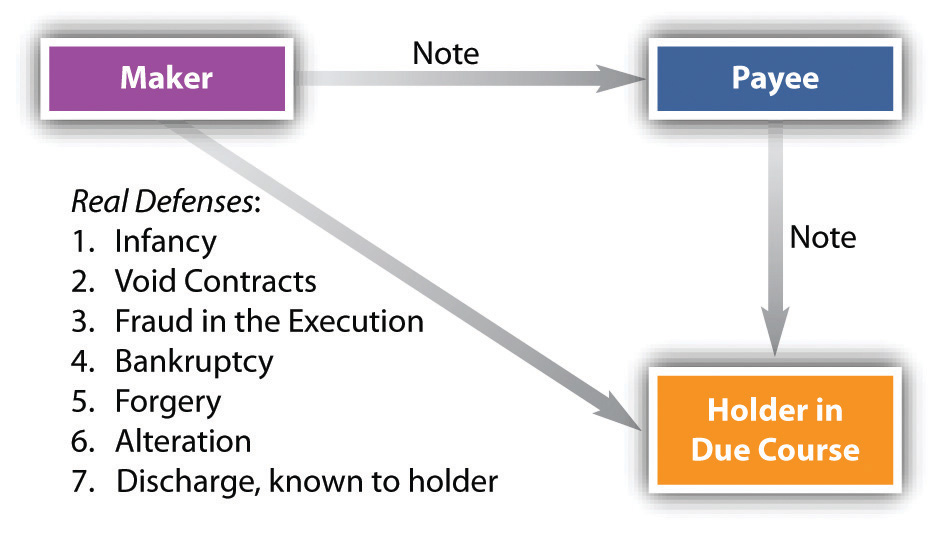
Holder in Due Course and Defenses
Holder and Holder in Due Course PDF Negotiable Instrument Private Law
Section 9 Of The Act Defines ‘Holder In Due Course’ As Any Person Who (I) For Valuable Consideration, (Ii) Becomes The Possessor Of A.
A Holder Is A Payee Who Can Sue The Parties Liable, While A Holder In Due Course Is A Bonafide Possessor Who Can Sue All Prior Parties.
Explore Key Requirements And Legal Protections Under The Ucc.
Holder Is A Person Who Is Entitled For The Possession Of A Negotiable Instrument In His Own Name.
Related Post:

