What Is A Course Objective
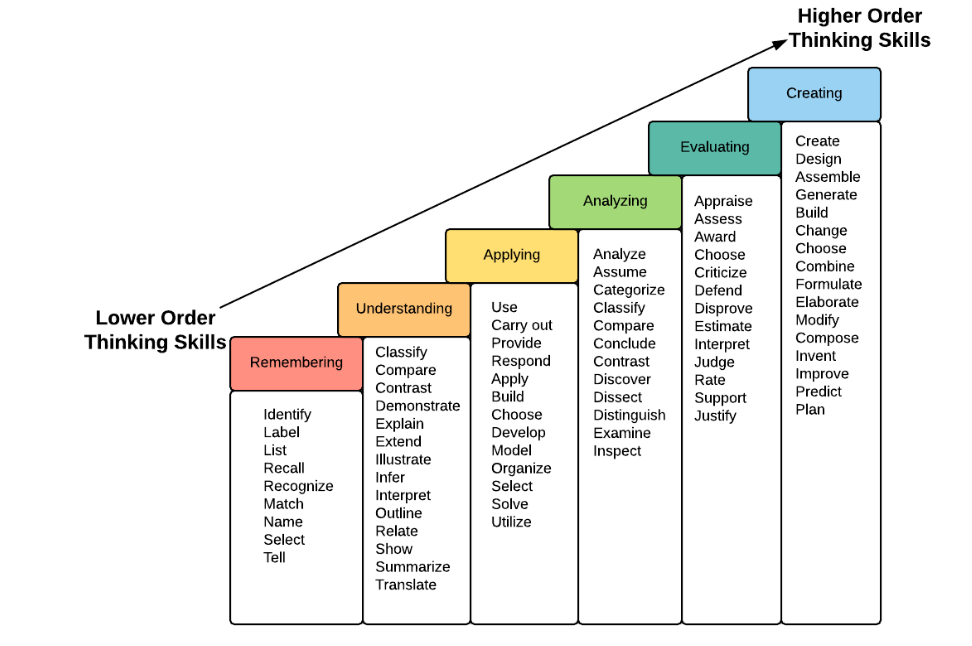
What Is A Course Objective - Course objectives are an integral part of the course, especially from a design and learning standpoint. Course objectives can be categorized into three primary types: They’re clear, measurable, and central to. Learning objectives/outcomes are specific statements that tell the student what they will be able to do at the conclusion of a learning experience. Learning objectives identify what the learner will know and be able to do by the end of a course. Course objectives allow your students to gain clarity on the scope of their learning and provide a framework that they can refer back to whenever they need. What are good learning objectives? Outcomes are achieved results or consequences of what was learned, i.e., evidence that. Objectives are intended results or consequences of instruction, curricula, programs, or activities. Grounded in three primary learning areas—attitudes, skills and knowledge—clear. Course objectives reflect specific knowledge, skills, abilities, or competencies that instructors expect students to acquire from a particular course. • 2.3 all learning objectives are stated clearly and written from the students’ perspective. Grounded in three primary learning areas—attitudes, skills and knowledge—clear. Objectives are intended results or consequences of instruction, curricula, programs, or activities. They are generally less broad that goals and more broad than student learning outcomes. Each type focuses on different aspects of learning, allowing. Writing clear course objectives help define specific competencies and outcomes that will allow students to achieve a specific set of skills, knowledge, attitudes or values. A course objective specifies a behavior, skill, or action that a student can demonstrate if they have achieved mastery of the objective. They define a goal for the learning that will take place in a course or program. Learning objectives are statements that clearly describe what students will be able to know, do, or value as a result of their educational experience. Learning objectives/outcomes are specific statements that tell the student what they will be able to do at the conclusion of a learning experience. They’re clear, measurable, and central to. Course objectives are an integral part of the course, especially from a design and learning standpoint. They are generally less broad that goals and more broad than student learning outcomes. Each. Learning objectives define what students should be able to do, know, or demonstrate after completing your course. A sound learning objective is an. Outcomes are achieved results or consequences of what was learned, i.e., evidence that. What are good learning objectives? • 2.3 all learning objectives are stated clearly and written from the students’ perspective. Outcomes are achieved results or consequences of what was learned, i.e., evidence that. Course objectives reflect specific knowledge, skills, abilities, or competencies that instructors expect students to acquire from a particular course. Course objectives are often very specific. Writing clear course objectives help define specific competencies and outcomes that will allow students to achieve a specific set of skills, knowledge,. A sound learning objective is an. Learning objectives identify what the learner will know and be able to do by the end of a course. A course objective specifies a behavior, skill, or action that a student can demonstrate if they have achieved mastery of the objective. Writing clear course objectives help define specific competencies and outcomes that will allow. Course objectives are often very specific. Course objectives are an integral part of the course, especially from a design and learning standpoint. They define a goal for the learning that will take place in a course or program. Learning objectives identify what the learner will know and be able to do by the end of a course. A sound learning. Course learning objectives indicate what a student will learn (future tense) in a course. Cognitive, affective, and psychomotor objectives. Grounded in three primary learning areas—attitudes, skills and knowledge—clear. Each type focuses on different aspects of learning, allowing. Objectives are intended results or consequences of instruction, curricula, programs, or activities. A sound learning objective is an. Outcomes are achieved results or consequences of what was learned, i.e., evidence that. Course objectives can be categorized into three primary types: I'll describe how creating detailed course objectives, and communicating them clearly to your students, can help the instructor, enhance student learning, and aid in the. Course objectives are often very specific. Learning objectives define what students should be able to do, know, or demonstrate after completing your course. Course objectives are an integral part of the course, especially from a design and learning standpoint. Course objectives are often very specific. Learning objectives are statements that clearly describe what students will be able to know, do, or value as a result of. Learning objectives define what students should be able to do, know, or demonstrate after completing your course. Objectives are intended results or consequences of instruction, curricula, programs, or activities. Learning objectives are statements that clearly describe what students will be able to know, do, or value as a result of their educational experience. Learning objectives identify what the learner will. Course learning objectives indicate what a student will learn (future tense) in a course. Course objectives are often very specific. Cognitive, affective, and psychomotor objectives. Writing clear course objectives help define specific competencies and outcomes that will allow students to achieve a specific set of skills, knowledge, attitudes or values. Learning objectives/outcomes are specific statements that tell the student what. Each type focuses on different aspects of learning, allowing. Course objectives form the foundation of the class. Course objectives are an integral part of the course, especially from a design and learning standpoint. A sound learning objective is an. Objectives are intended results or consequences of instruction, curricula, programs, or activities. Learning objectives are statements that clearly describe what students will be able to know, do, or value as a result of their educational experience. Cognitive, affective, and psychomotor objectives. I'll describe how creating detailed course objectives, and communicating them clearly to your students, can help the instructor, enhance student learning, and aid in the. Learning objectives/outcomes are specific statements that tell the student what they will be able to do at the conclusion of a learning experience. Writing clear course objectives help define specific competencies and outcomes that will allow students to achieve a specific set of skills, knowledge, attitudes or values. Course objectives provide the course with a permanent structure to which. Learning objectives identify what the learner will know and be able to do by the end of a course. As such, objectives need to be written in such a way that they are measurable by some sort of assessment. Course learning objectives indicate what a student will learn (future tense) in a course. • 2.3 all learning objectives are stated clearly and written from the students’ perspective. Learning objectives define what students should be able to do, know, or demonstrate after completing your course.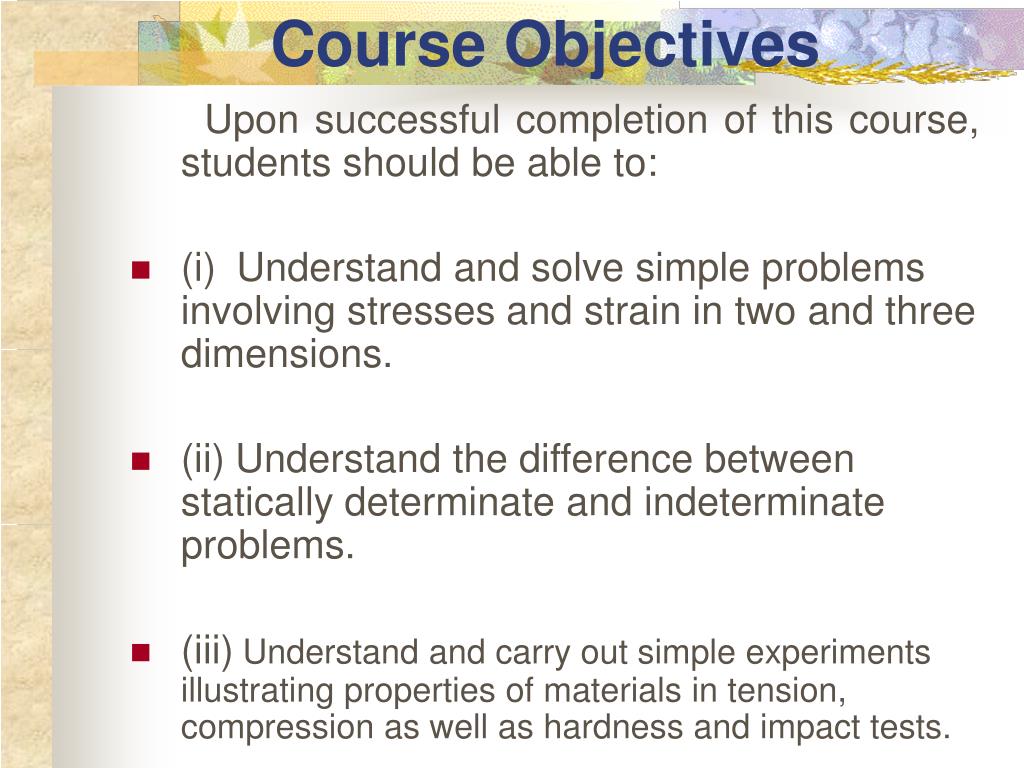
PPT ME16A INTRODUCTION TO STRENGTH OF MATERIALS PowerPoint
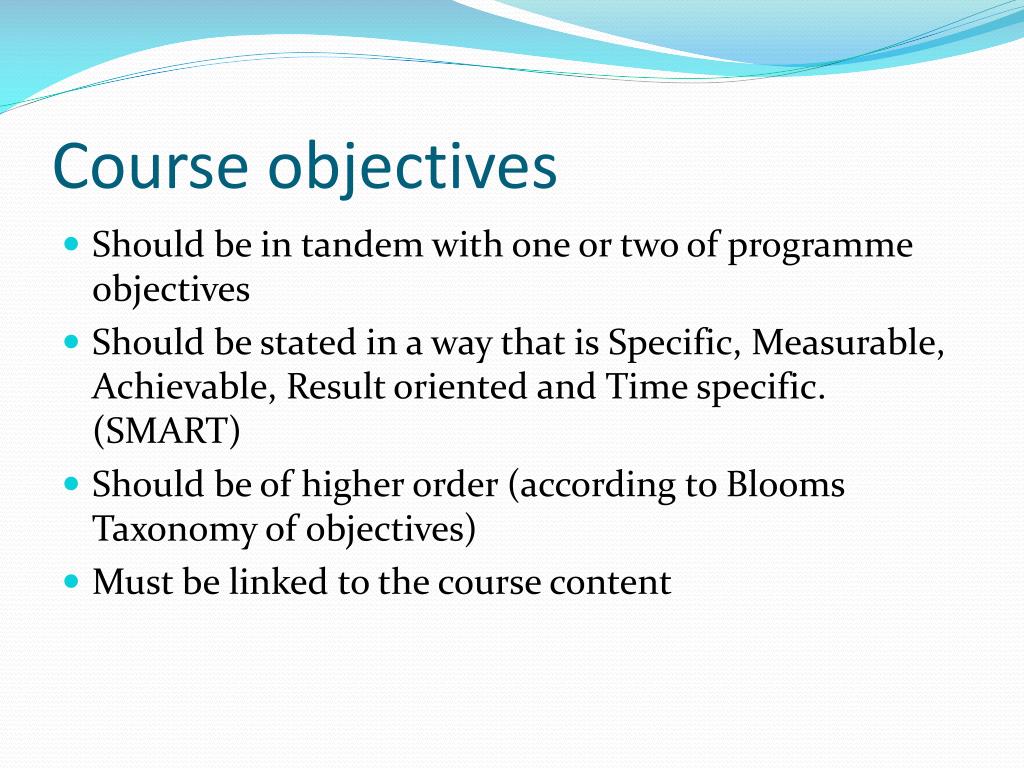
PPT COURSE OUTLINE PowerPoint Presentation, free download ID5573396

Learning Objective Examples for Better Training Venngage

10 Course Objectives Examples EdApp The Mobile LMS
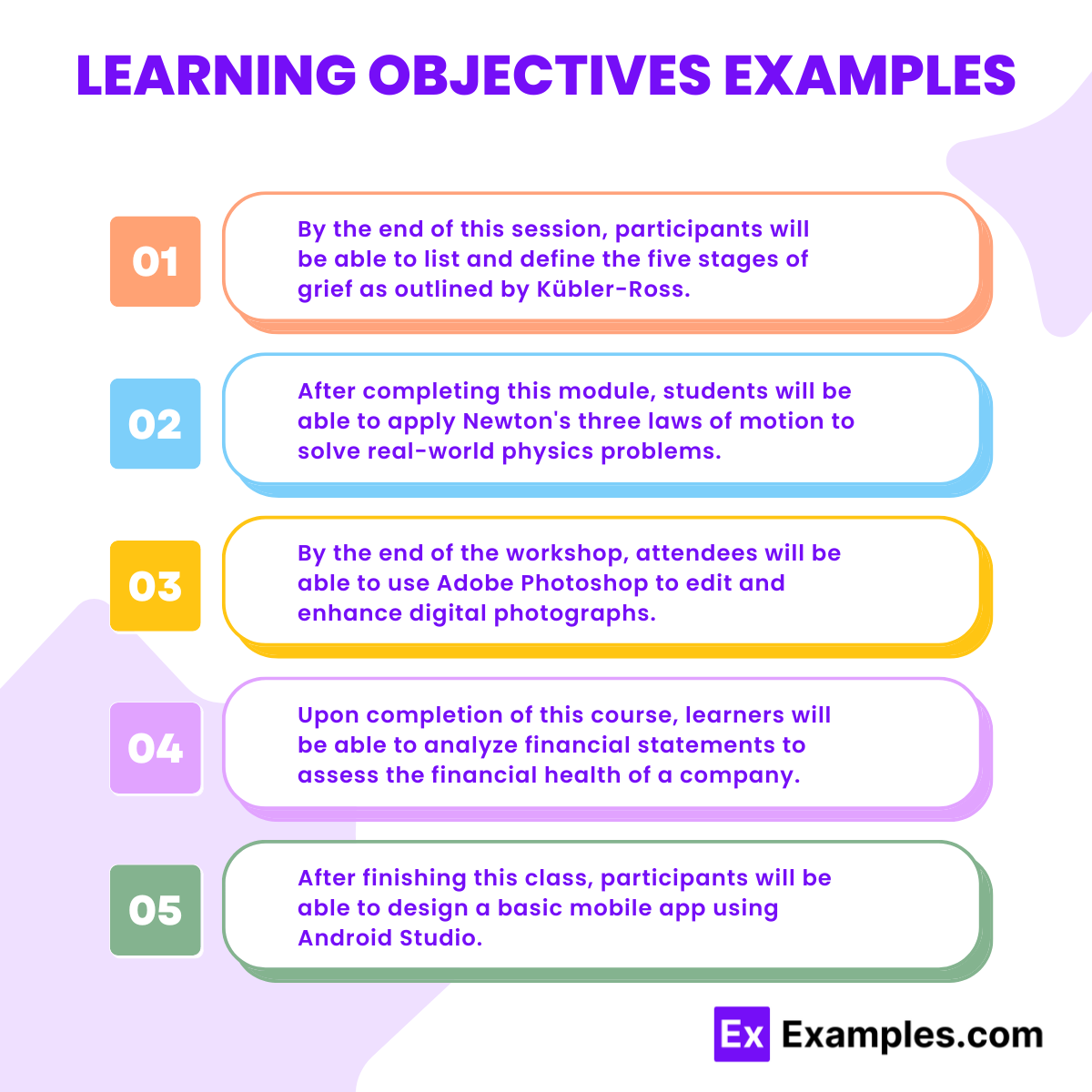
40+ Learning Objectives Examples
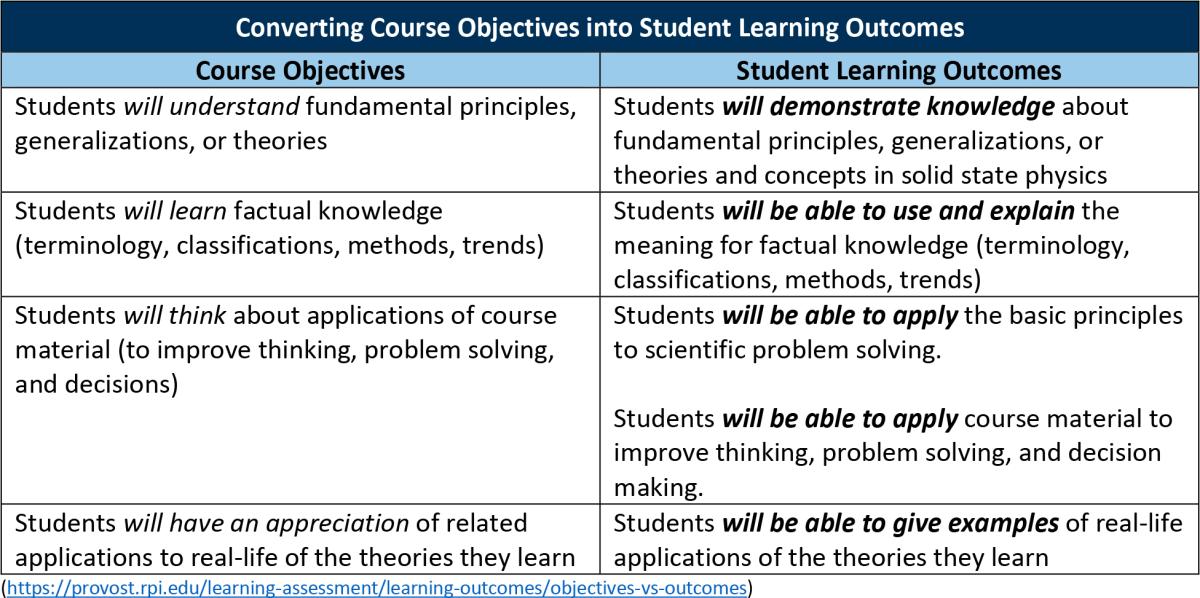
Student Learning The University of New Orleans
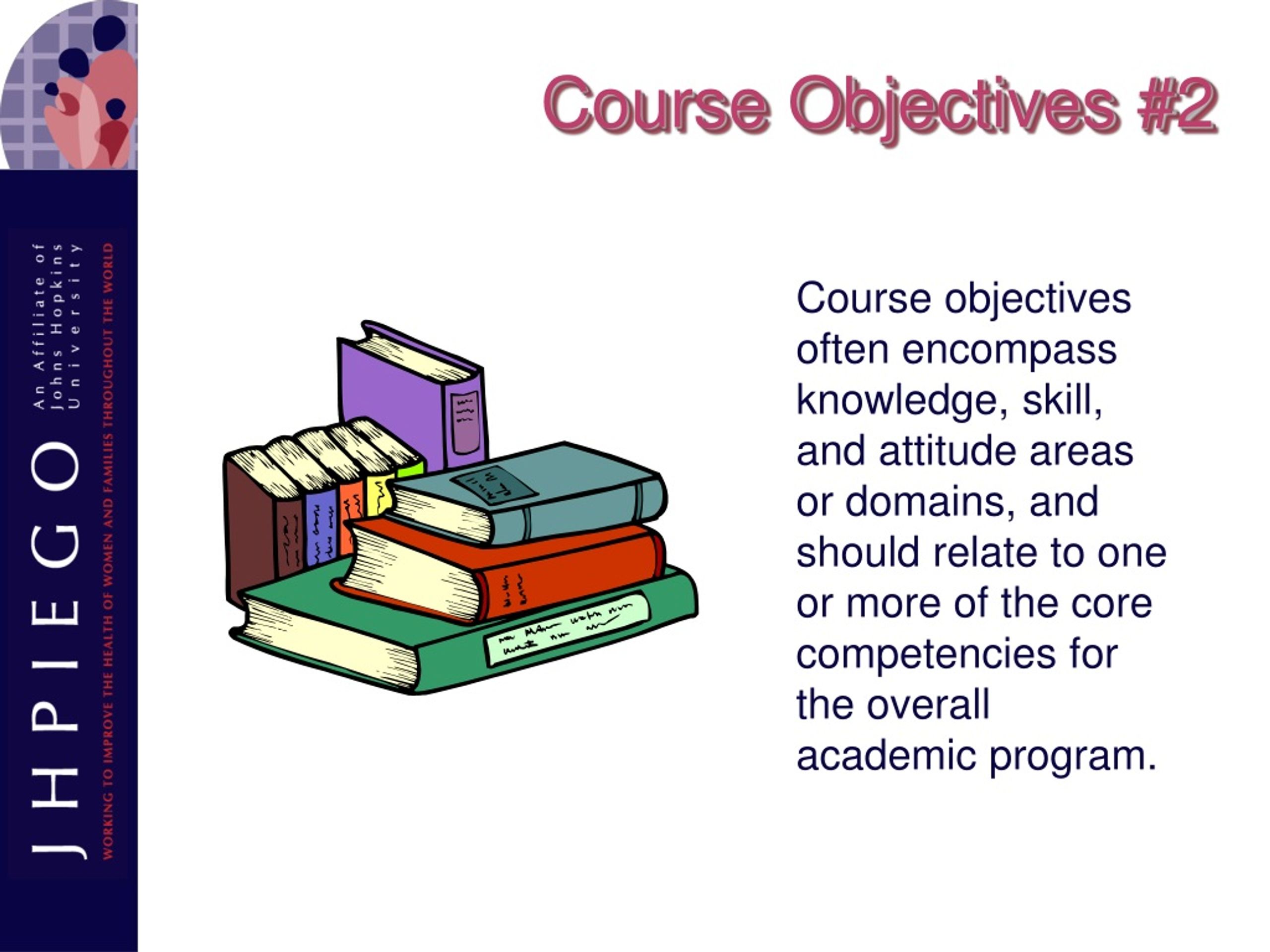
PPT Develop Objectives for Learning PowerPoint Presentation, free
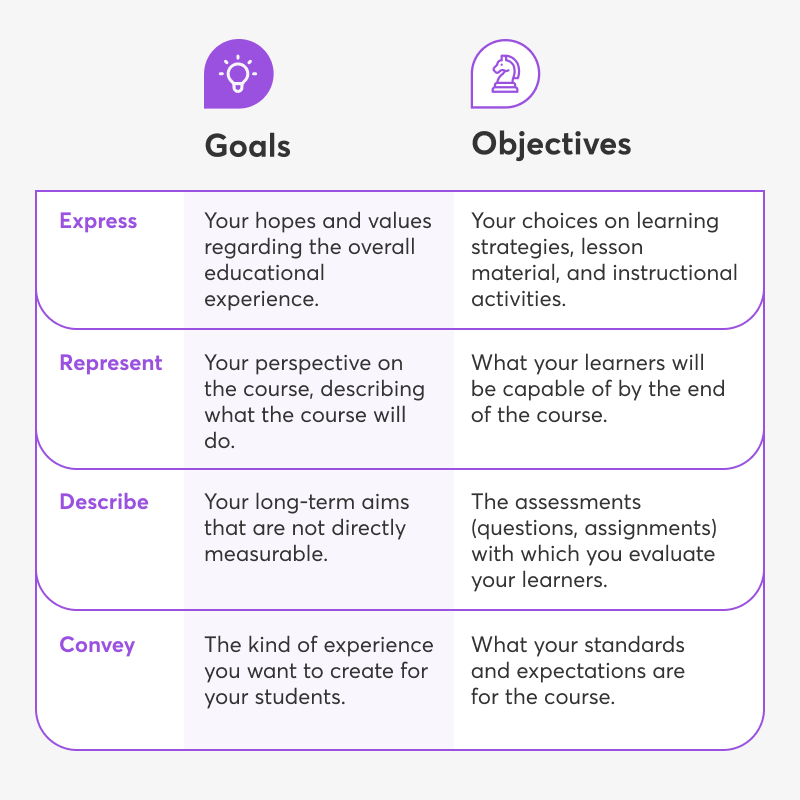
Learning Goals & Objectives in Course Design How To Prepare a Great
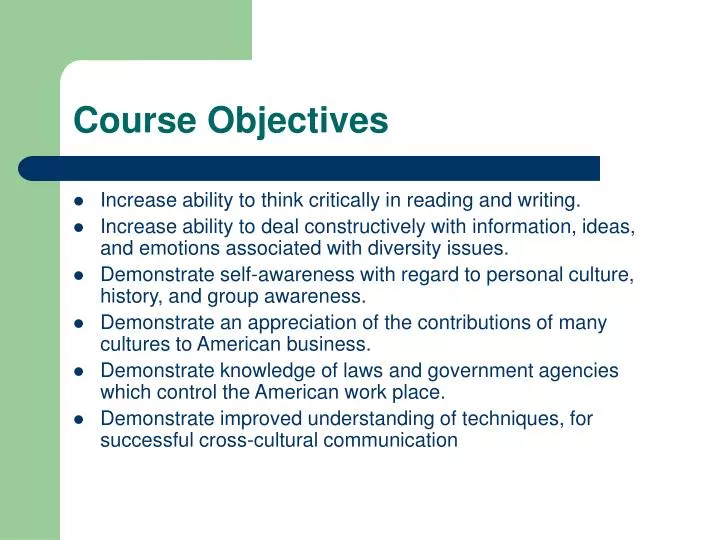
PPT Course Objectives PowerPoint Presentation, free download ID869480
Writing Measurable Course Objectives The Center for Teaching and
Grounded In Three Primary Learning Areas—Attitudes, Skills And Knowledge—Clear.
Course Objectives Allow Your Students To Gain Clarity On The Scope Of Their Learning And Provide A Framework That They Can Refer Back To Whenever They Need.
They’re Clear, Measurable, And Central To.
They Are Generally Less Broad That Goals And More Broad Than Student Learning Outcomes.
Related Post: